Sacramento County Confirms 2 Measles Cases and Urges Vaccination
Health and Social Services
Sacramento County Public Health (SCPH) was notified Wednesday, April 1 of two additional measles cases in unvaccinated children. SCPH is working with multiple clinics and emergency departments in the region to notify those who have been exposed. Both children are in isolation and are recovering.
These two cases add to a total of 34 confirmed measles cases in California recorded this year, as of March 30, 2026.
“The continued identification of measles cases in our community is concerning and underscores how quickly this disease can spread,” said Dr. Olivia Kasirye, Sacramento County Public Health Officer. “Measles can cause serious illness but it’s important to remember these cases are preventable. Vaccination is the most important step people can take right now to protect themselves and others.”
These five confirmed Sacramento County measles cases in recent weeks show the disease is circulating in Sacramento County. The overall risk to the general public remains low but residents, especially those who aren’t vaccinated against measles or whose vaccination status is unknown, should be hyper-aware and take steps to protect themselves and others.
SCPH urges people to check the vaccination status of themselves and family members, especially children. Vaccination is proven to be the best prevention against measles.
For anyone who is feeling ill or whose children are sick, it’s best practice to avoid hosting or attending holiday gatherings, birthday parties, group gatherings, faith-based services and school.
Anyone returning home after traveling to an area experiencing a measles outbreak should monitor for symptoms and limit contact with others.
Anyone experiencing symptoms of measles should stay home, avoid contact with others and immediately call their healthcare provider before visiting a medical facility. Early reporting and isolation help prevent further spread.
Those who think they are at risk of developing measles can also contact SCPH’s Communicable Disease Program at (916) 875-5881. A trained public health team is available to assess individual risk and determine whether preventive steps, including MMR vaccination, are recommended.
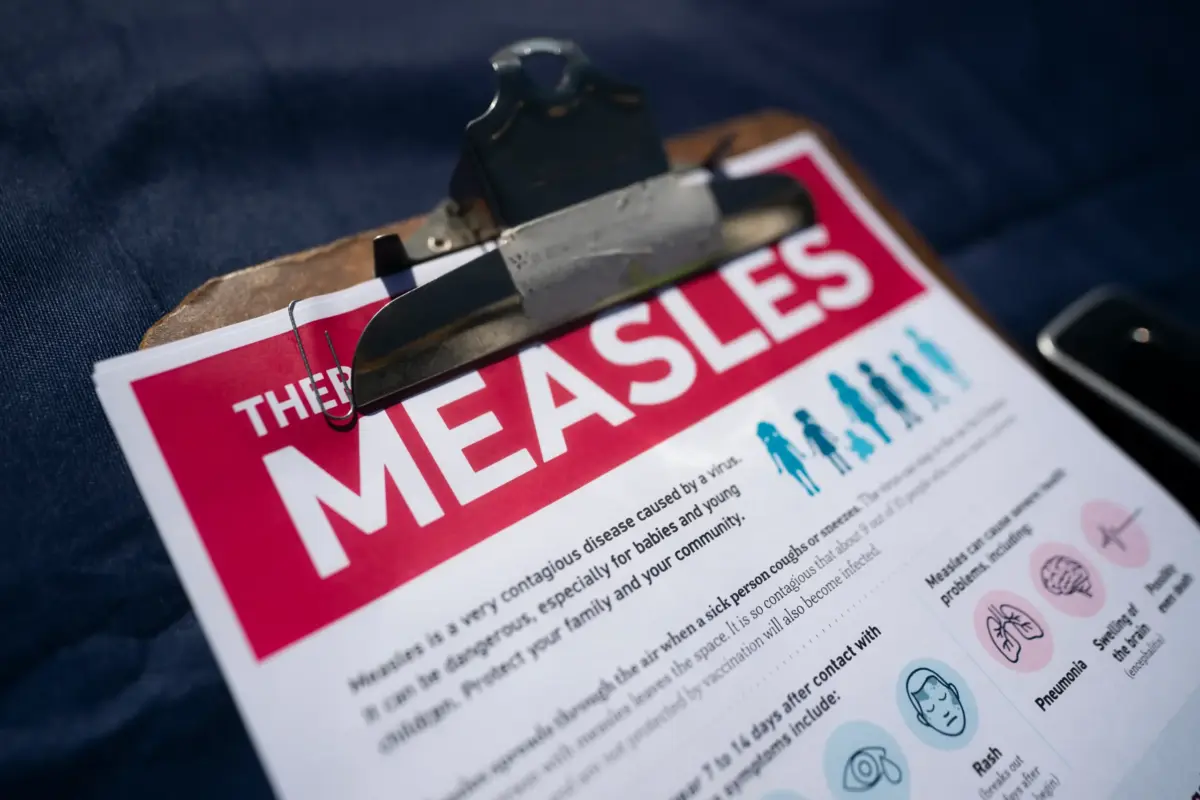
Measles can be safely prevented with a measles, mumps, and rubella vaccine (MMR) or a measles, mumps, rubella, and varicella vaccine (MMRV). They are administered in two doses (typically given at one year and four to six years old) and are highly effective. Two doses are 97% effective in preventing measles, and one dose is 93% effective.
Measles is highly contagious and can spread through the air and on surfaces. People can contract measles just by being in the same room with someone who is infectious. Early symptoms typically appear 8 to 12 days after exposure and include fever, cough, runny nose and red eyes, followed by a rash that spreads from the face down the body. Measles can cause serious complications, especially in infants, young children and individuals with weakened immune systems.
The United States has reported over 1,671 confirmed measles cases in 2026, 92% of which involved unvaccinated individuals or individuals whose vaccination status was unknown. Cases have been reported from 33 states across the nation. Learn more about measles on the CDC Measles website or the CDPH Measles website.
SCPH encourages residents to review their vaccination records. Adults born after 1957 who lack documentation of MMR vaccination or prior measles infection should speak with a healthcare provider. Some adults may need a second dose. Individuals vaccinated between 1963 and 1967 may require revaccination. Children should receive the MMR vaccine at 12–15 months and again between ages four and six. Infants as young as six months can receive an early dose before international travel. For more information regarding vaccinations, please visit www.sacvax.com.
Nearly all health insurance plans are required to cover the cost of MMR and MMRV vaccines. Insured persons should check with their healthcare provider or a local pharmacy to see what vaccines are offered. Uninsured or underinsured children and adults can access free or low-cost vaccines at clinics enrolled in the Vaccines for Children (VFC) and Vaccines for Adults (VFA) programs. For information about clinics that offer free or low-cost immunizations for individuals who are uninsured or underinsured, call 2-1-1.
Check out Local Events , City Resources Map , Volunteering Opportunities , Addiction Help and Mental Health.
0 Comments